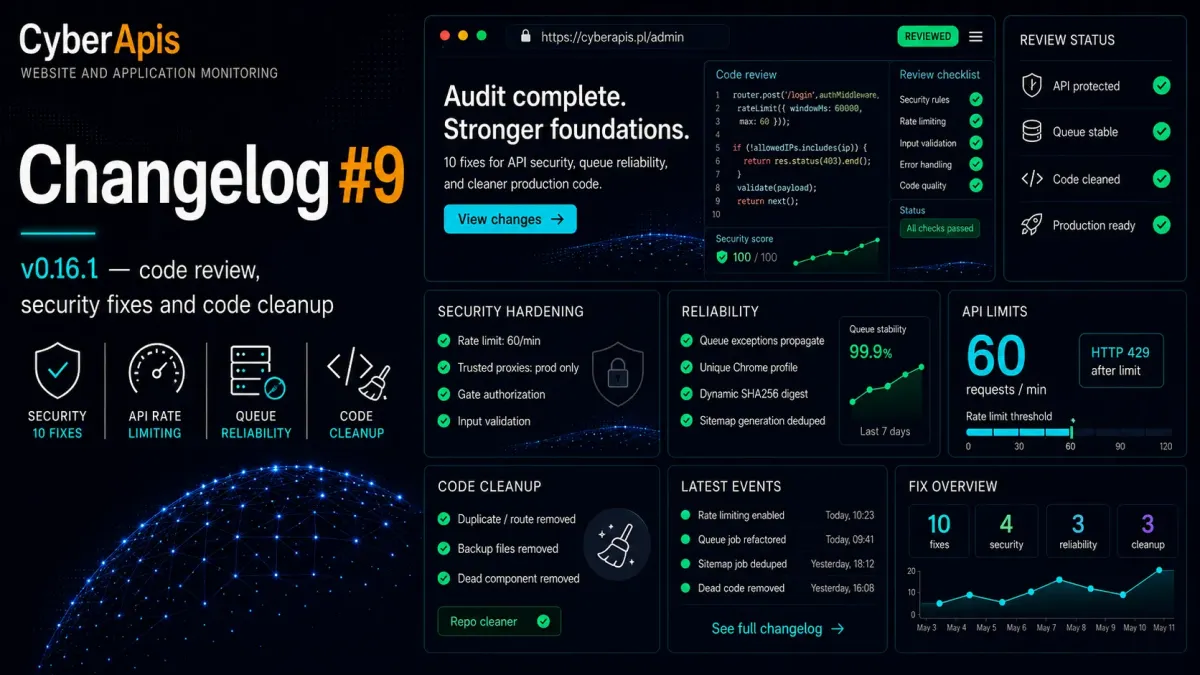
Cyberapis v0.16.1 — code review: 10 security and code quality fixes
10 fixes after code review — security, reliability, and codebase cleanupVersion v0.16.1 undergoes a thorough code audit by app.devin.ai. As a result,...
Read more →
10 fixes after code review — security, reliability, and codebase cleanupVersion v0.16.1 undergoes a thorough code audit by app.devin.ai. As a result,...
Read more →
Trusted Devices — why MFA doesn't have to be painfulTwo-factor authentication is one of the most effective account protection methods. The proble...
Read more →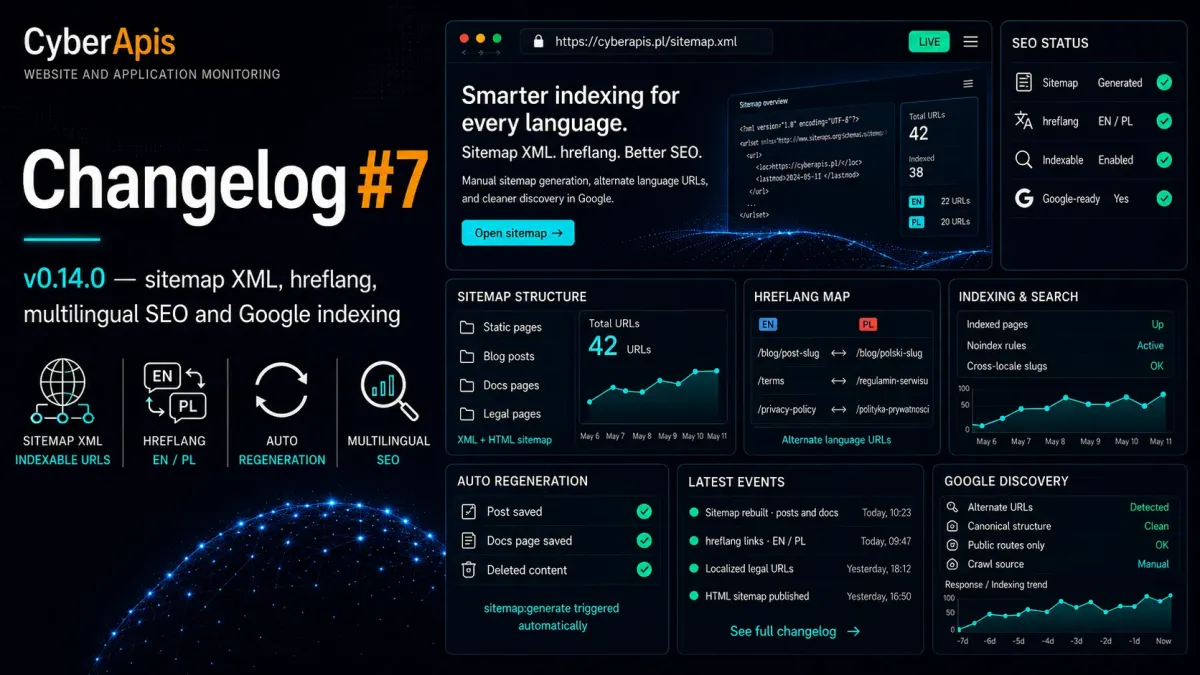
How Google indexes multilingual sites — XML sitemaps and hreflang under the hoodMultilingual SEO is one of the most underappreciated aspects of techni...
Read more →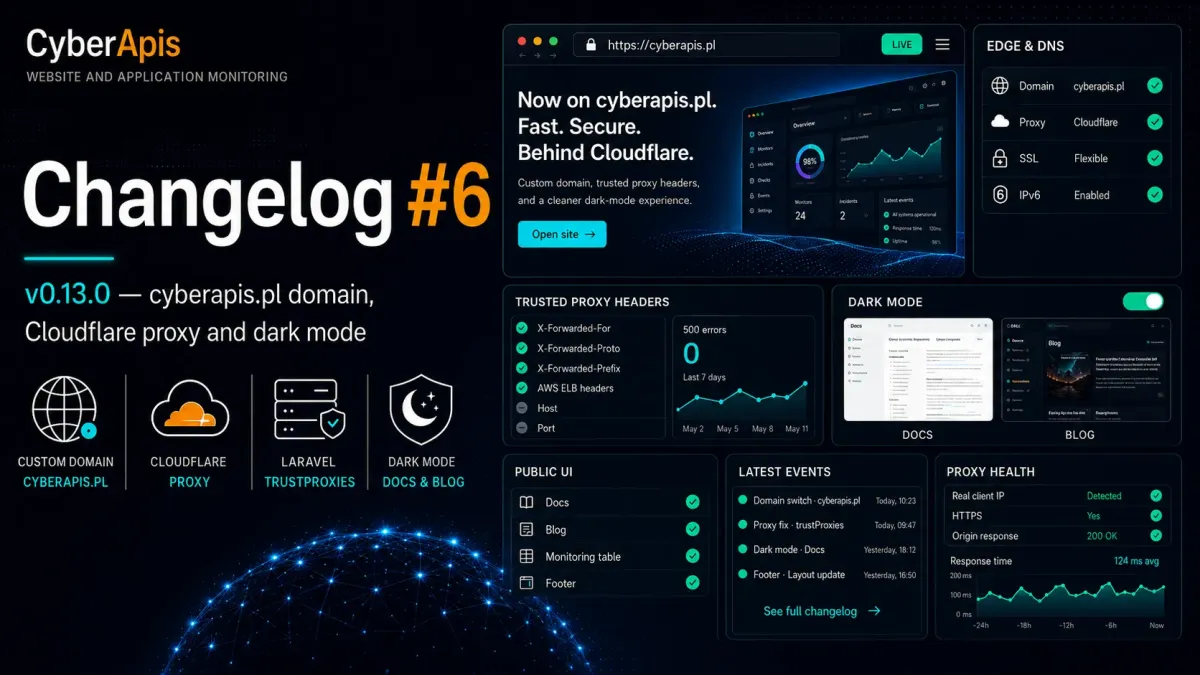
Cloudflare + Laravel — how not to lose requests behind a proxyPlacing a Laravel application behind Cloudflare introduces an intermediary layer that ch...
Read more →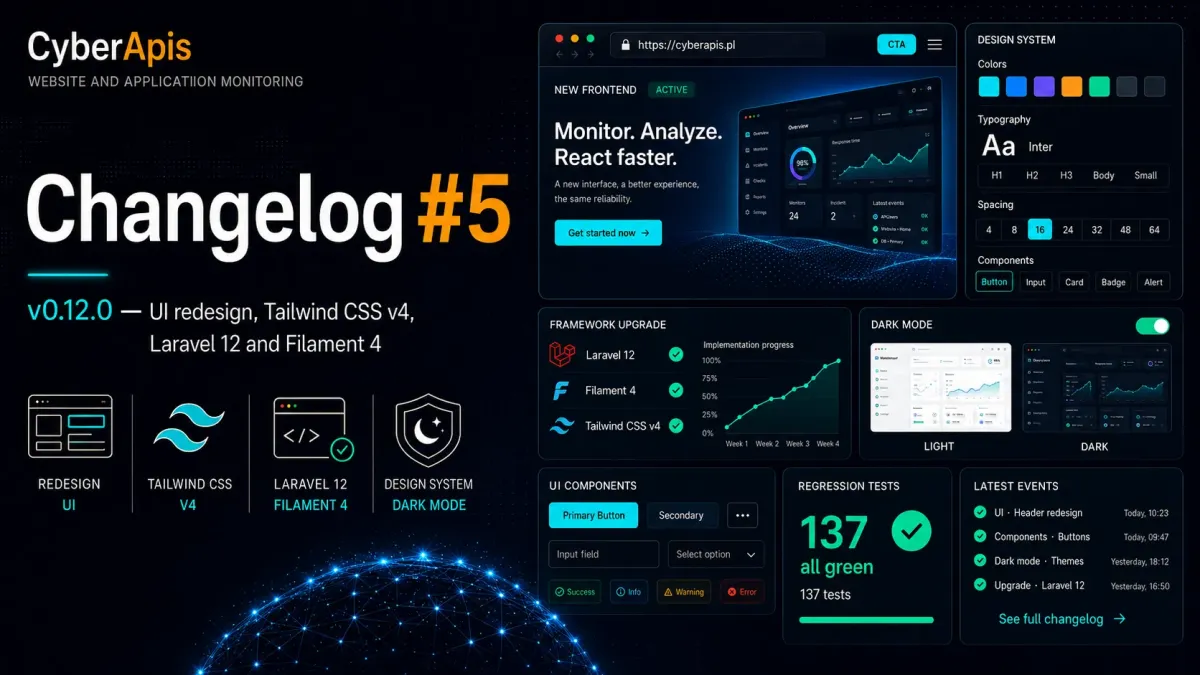
Tailwind CSS v4 and Laravel 12 — what changed and why it mattersTailwind CSS v4 is the biggest change in this framework's ecosystem since the int...
Read more →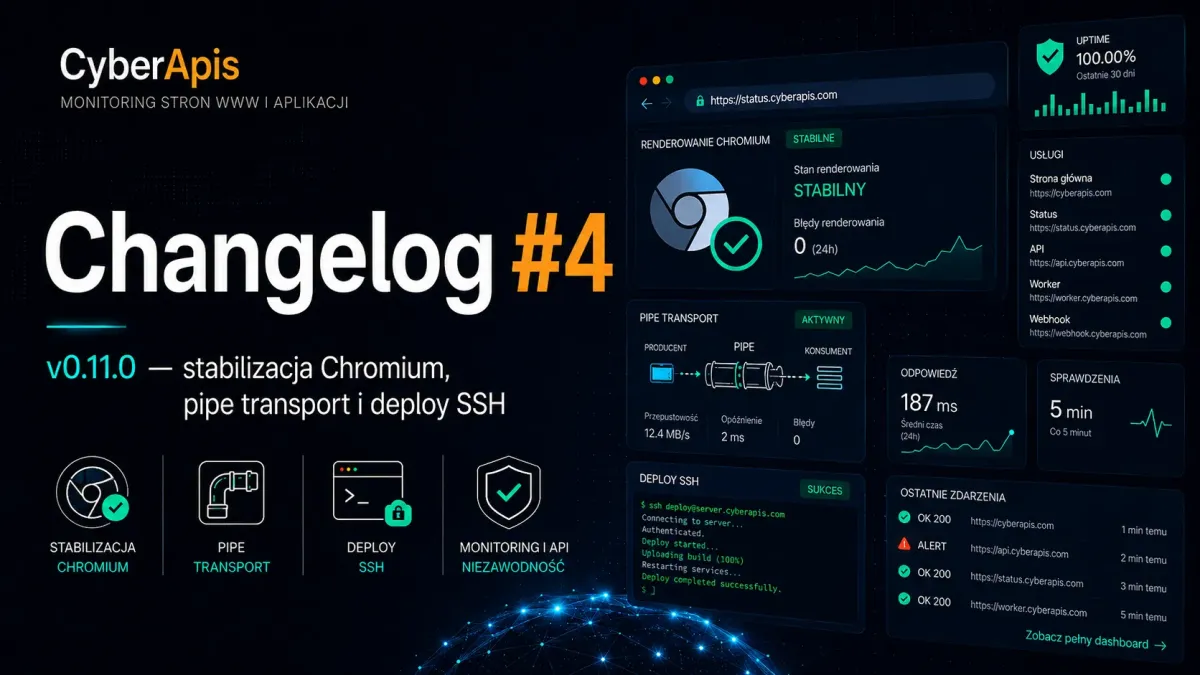
Chromium process architecture — why Puppeteer on a production server is challengingRunning headless Chromium on a production server is fundamentally d...
Read more →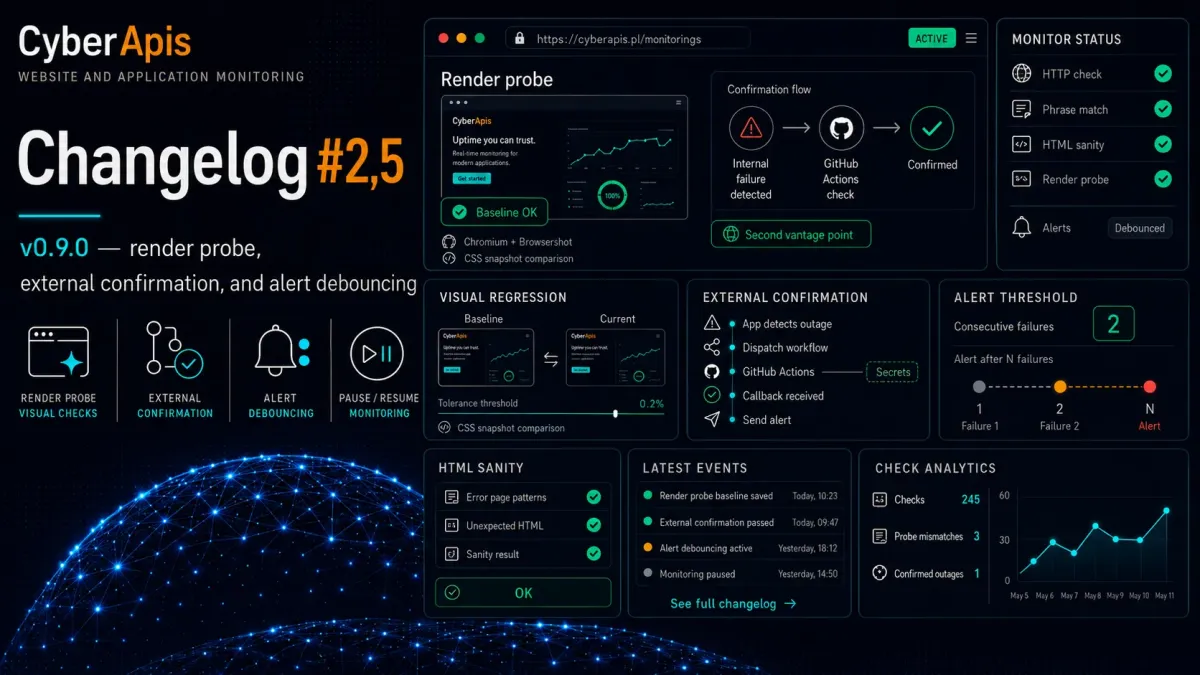
What is a render probe and why HTTP monitoring isn't enoughStandard HTTP monitoring checks whether the server responds with a 200 status and whet...
Read more →
How Browsershot turns a page into a screenshot — the monitoring pipeline explainedWhen Cyberapis detects a CSS style problem on a monitored website, a...
Read more →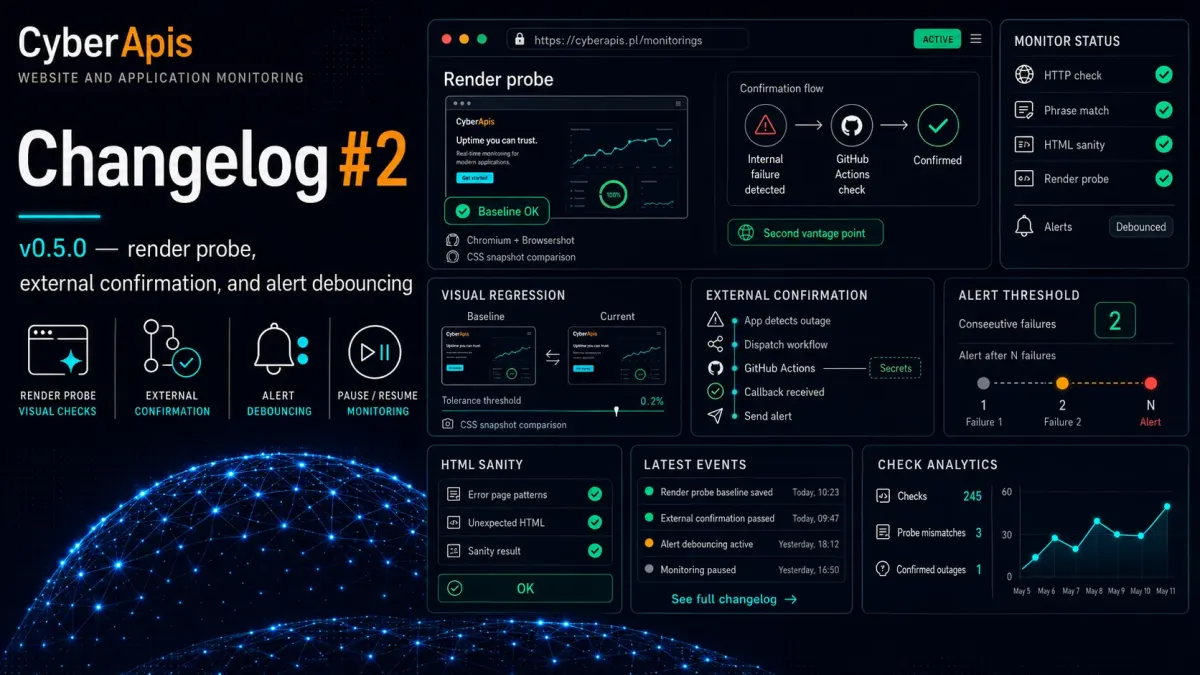
What is a render probe and why HTTP monitoring isn't enoughStandard HTTP monitoring checks whether the server responds with a 200 status and whet...
Read more →
Why website monitoring is more than "does the site return 200"Monitoring website availability seems simple — send an HTTP request, check the...
Read more →